
Spring bird migration is peaking in New England, with tens of thousands of birds passing through Norfolk County each night. Brookline has a rich tradition of bird watching. Want to get in on the action? Brookline.News asked local birding experts how to make the most of this spring’s migration.
Where to go
Hall’s Pond Sanctuary is a hidden gem for birdwatchers year-round, boasting 170 bird species to date on the bird observation database eBird. The sanctuary especially packs a punch during spring migration.
“There’s a lot of habitat diversity within a tiny place,” said Neil Gore, a Friends of Hall’s Pond board member who has been birdwatching in Brookline for three decades. The marsh, forest, field and tall trees contained within the sanctuary make for a perfect habitat for migrating birds, he said.
Leverett Pond in Olmsted Park is another birding hotspot during migration thanks to its water, according to Bob Mayer, a local birding expert. Also contained within the park, Willow Pond and Wards Pond are great places to spot migrating ducks.
McLaughlin Woods in Mission Hill is a lesser-known spot popular with migrating birds that rivals the diversity of Hall’s Pond. Other spring migration hotspots just outside of Brookline include the Chestnut Hill Reservoir, the Riverway, Jamaica Pond and the Arnold Arboretum.
“One of the wonderful things about living in Brookline or Jamaica Plain is that you have an abundance of opportunities for birdwatching,” said Mayer.
When to go
Just like the early bird gets the worm, the earlier birder gets the bird, and to Correne George, there’s no better time to start catching spring migration than right now.
“The earlier you start, the better,” said George, a teacher and naturalist at Mass Audubon’s Boston Nature Center. “There are more waves of migration coming soon, but many migrants are already here.”
Spring migration in New England peaks in mid-May, and after that, the higher density of leaves in trees makes it harder to spot birds.
The hours around sunrise are the best time to watch songbirds because that’s when they feed and are the most active and vocal. If you can’t make it out that early, a second burst of activity occurs from late afternoon until sunset.
What to look for
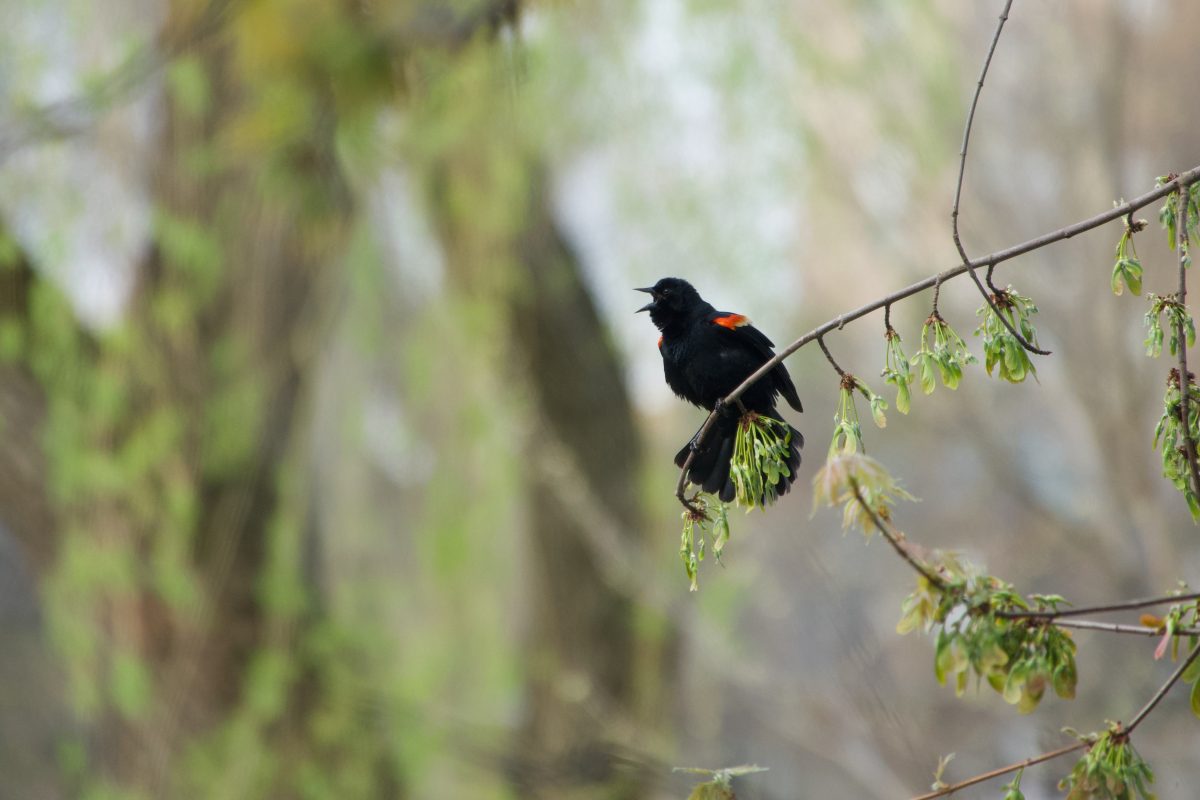
Water features are popular with migrating birds, and Mayer advised visiting marshes to see travelers like the red-winged blackbird, which likes to nest in cattails.
He also noted that tall trees and bugs attract migrating birds, and advised looking for warblers in blooming oak trees.
“Oak trees will bloom in early to mid-May, bringing bugs,” he said, “and migrating warblers want the bugs.”
The Pinebank Promontory at Jamaica Pond is an especially great place to view spring warblers because it provides a vantage point into the tree canopy below, he added.
According to Gore, there is a wide variety of spring warbler species to look forward to.
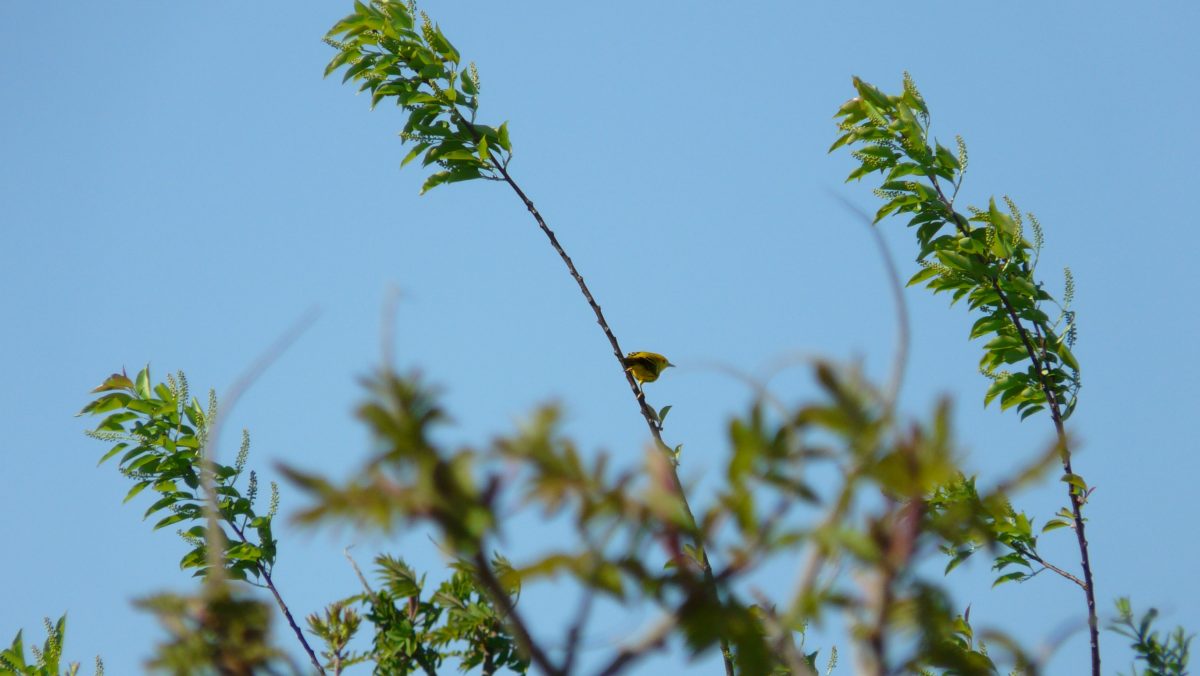
“Hall’s Pond is a great place to spot the northern parula and the northern waterthrush,” he said. “We’ll also see other beautiful warblers like the black-and-white warbler, yellow warbler, ovenbirds and yellowthroats.”
Although warblers often steal the spotlight during spring migration, Gore is drawn to other migrating species as well, like warbling vireos, hermit thrushes and woodcocks.
How to get started
Other than by getting a decent pair of binoculars, the best way to get into birding is by going on group bird walks, said Mayer.
“If you go on a bird walk, there will be lots of eyes and people who know what they’re doing,” he said. “In a group, someone will spot a bird and point it out for everyone to see.”
There are bird walk options for people of all abilities, too. The Boston Nature Center offers accessible birdwatching programs like Birding in Place during their upcoming Bird-a-thon in May. The program offers binoculars, scopes on tripods and a bench for sitting so participants can bird within a 25 foot radius circle.
New birdwatchers can also use the Merlin Bird ID app, which helps users identify birds by appearance and sound, and eBird, which allows users to navigate a database of bird sightings in their area and sign up for email alerts about rare bird sightings.
‘Get people excited about birds’
Urban development can create obstacles to bird migration, and experts like George say people living in Brookline can pitch in to help birds navigate heavily populated areas.
One way is by contributing time and money to land conservation and habitat restoration projects, she said, as well as getting younger generations in cities to experience and care about nature.
She also encouraged residents to keep cats indoors, plant native plants and pollinators in their lawns to provide shelter and food for migrating birds, and reduce or eliminate pesticide use.
Most birds migrate at night and are easily disoriented by light pollution, and George praised Boston’s participation in the National Audubon Society’s Lights Out campaign to turn off building lights during migration season.
Finally, she encouraged residents to share their bird sightings with friends and family to spread interest in conservation.
“Talk about places you like to go to birdwatch, especially if they’re accessible on public transit,” she said. “Get people excited about birds.”
Upcoming bird walks
The Boston Nature Center will host a free bird walk on May 10 to kick-off their annual Bird-a-thon birding competition.
Neil Gore will lead bird walks at Hall’s Pond Sanctuary on May 6 and May 13.
Bob Mayer will lead bird walks at the Arnold Arboretum on May 4 and May 18, and in Franklin Park throughout May.