
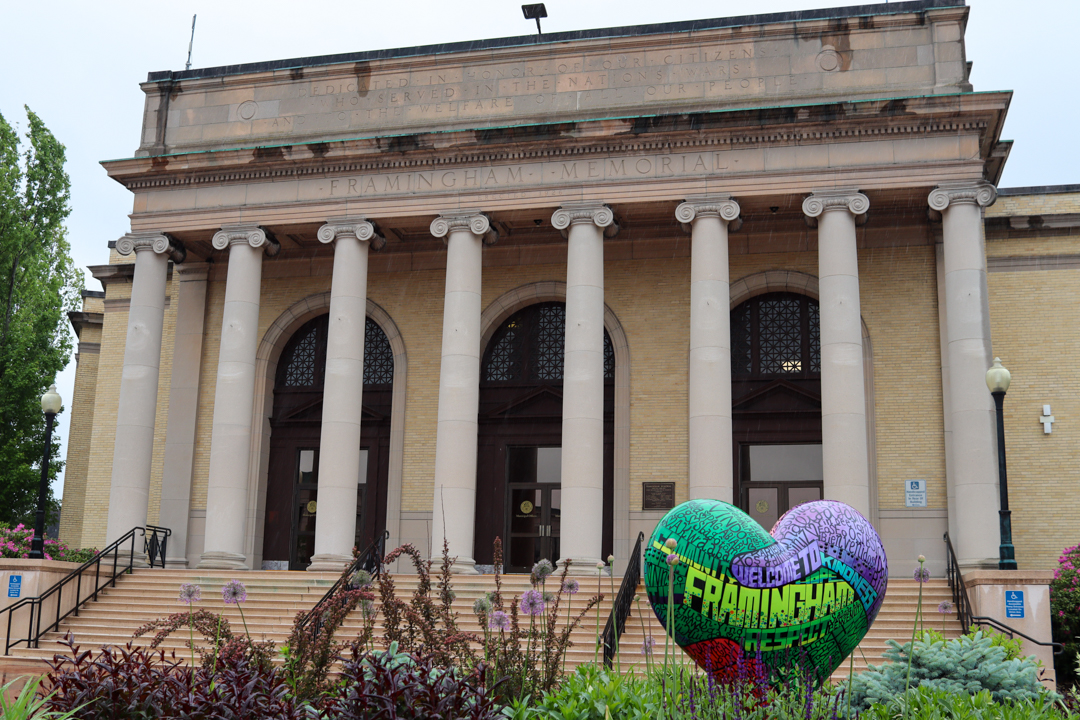
With close to 63,000 residents, Brookline is the second largest town in Massachusetts behind only Plymouth, a status some residents would like to eschew: the City Charter Campaign continues to roll along, even as they’ve pushed their goal to the 2026 ballot.
But the runner-up distinction is also a relatively new one: it was only awarded to Brookline in 2018, when the municipality of Framingham gave up its title, transitioning from the state’s largest town into the 14th-largest city. It’s the most recent municipality to make that change in Massachusetts.
Framingham’s conversion has not been without its hiccups. While most current and former elected officials said the city form of government has made Framingham more efficient and responsive to residents, some also said they would have organized the city charter differently if given a second chance.
Framingham’s first mayoral term was also a fraught one, in which the mayor and city council were frequently at odds, with each side blaming the other for stoking animosity.
Brookline is still many steps from city status: Even if voters approve a charter commission on a future ballot, the elected commission members could still decide to stick with a town form of government in the new charter.
But as the town weighs the decision, Framingham offers the most recent example of how the process could go.
Brookline’s City Charter Campaign argues that a city form of government would bring more accountability and responsiveness for residents than Town Meeting. They also argue that Brookline’s expansive needs cannot be met by a volunteer, part-time board like the Select Board or twice-yearly Town Meetings. A city council and mayor, by contrast, could provide long-term planning guidance and an efficient way to handle the budget and urgent legislation.
Framingham’s charter campaign, which passed narrowly by just 105 votes, and after several failed attempts, made similar arguments. Seven years down the line, did those promises hold true?

Are cities more efficient?
Currently, most of the big decisions that Brookline makes, including its annual budget approval, must go before Town Meeting (Read the Brookline.News guide to town government for an in-depth refresher). However, Town Meeting is scheduled just twice a year, in the spring and in the fall. A special meeting could be called in the event of an urgent need, but the structure largely organizes Brookline’s lawmaking into a two-times-a-year schedule.
City councils, on the other hand, can pick up items anytime. In Framingham, city councilors agreed: the process is more efficient and quicker than the previous model.
Councilor Adam Steiner, who was a Town Meeting member prior to the change, said Town Meeting could slow things down.
“If there was an issue that needed to be addressed right away … it was often a matter of waiting until the next town meeting,” Steiner said. “Given the circumstances of the last few years, [the city council] has been helpful.”
“It’s more efficient, it’s more nimble, it moves faster,” said George King, former town manager and current city councilor in Framingham.
Adam Blumer is the chair of Framingham’s recent charter review committee, which assessed the success of the charter last year for the first time since Framingham’s transition. He was also an elected member of the original charter commission that organized the city’s structure.
Blumer said the structure of a city council is definitely quicker, but the actual efficiency will depend slightly on who is elected. “There is a piece of things that is structural and a piece that is personality,” he said.
The current Mayor of Framingham, Charles Sizitsky, said financial issues in particular are easier and faster to sort out with a city council.
“On balance, I would have to say that being a city has been beneficial for the operation of local government,” Sizitsky said.
Sisitsky, who is a former Select Board member and city councilor, said Town Meeting members were not always fully educated about all of the articles on the warrant, which often required hours of reading before the meeting itself. City councilors have more of an obligation to know what’s going on and how the government functions, he said.
However, for local residents, the difference may not be as stark.
“From the residents’ perspective, nothing has changed: the street gets plowed, the trash gets picked up, the school buses run,” said longtime resident Brian Sullivan.
However, he argues what has changed is the amount of politics in the city.
“Nothing is off the table now,” he said. “There’s a lot of horse trading that goes on behind the scenes.”
Sullivan said the city form of government concentrated the power in the city down to just the city council: “Now in Framingham, you only have to convince six people,” he said, referring to the six votes needed to win on an 11-seat board.
As far as efficiency goes, Sullivan said things are definitely getting done quicker, but “the question is should they have been done in the first place?”
Mary Kate Feeney, a local resident, journalist and former city council candidate, said that the city’s efficiency is “still a work in progress,” but she thinks the transition was still “the right decision for Framingham.”
Feeney argues that it’s been beneficial for the city to tackle concerns constantly, on a biweekly basis, with the city council and mayor, rather than twice a year with Town Meeting.
Are cities more representative? Are city councilors more accountable to residents?
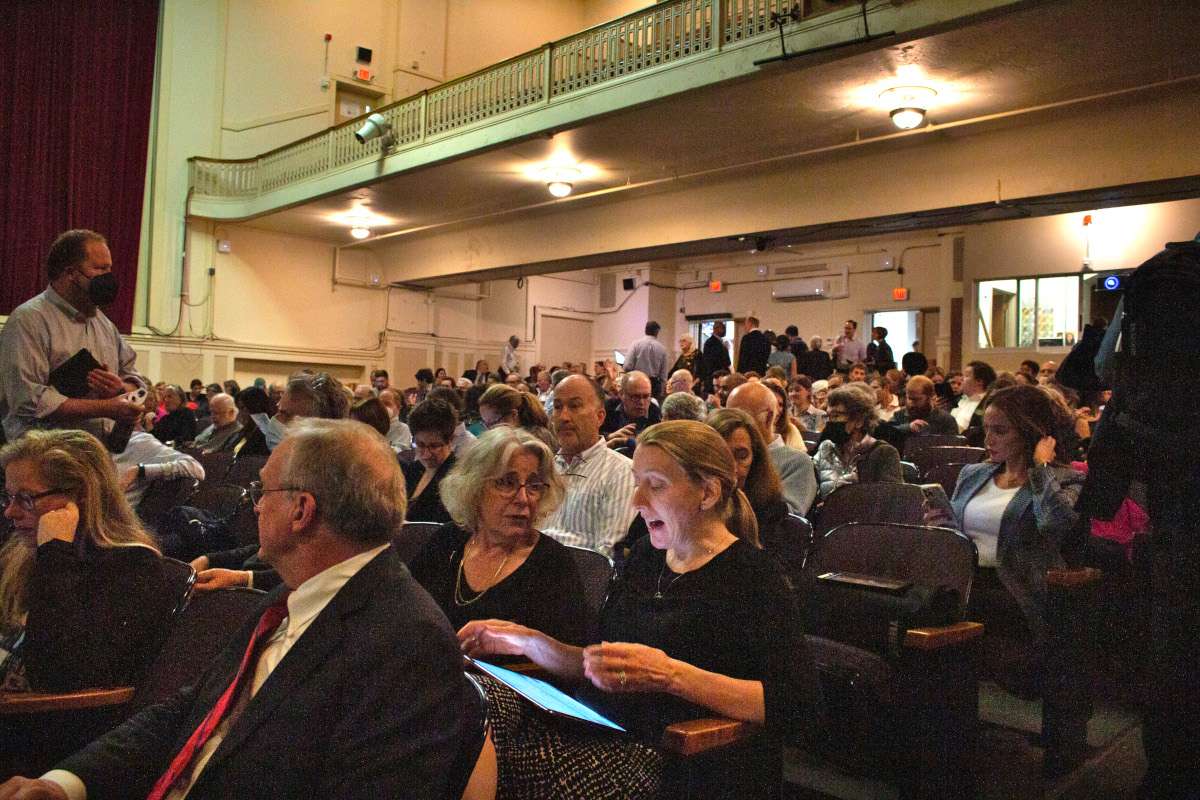
In theory, Town Meeting should be a broadly democratic and representative body, with over 200 members that ideally stem from each district of the town.
But in Framingham, according to Charter Review Chair Blumer, “it wasn’t really as representative in reality as it was in theory,” he said. “We had a lot of empty seats.”
“The representation across town was very much unequal in town meetings,” said former City Councilor Dennis Giombetti, “There were a lot of vacancies.”
Councilor Steiner put a finer point on the issue: “Town Meeting tended to be older and whiter and wealthier than Framingham as a whole,” he said.
The city council structure includes nine members that must come from Framingham’s nine districts, and two at-large members that are elected by the city as a whole.
One of Brookline’s City Charter Campaign’s other key arguments is that having a smaller legislative and executive body means residents know who to contact about problems that arise.
That’s been a definite benefit in Framingham, Giombetti said.
“You have someone who is accountable now, whereas before it was an unelected town manager,” he said.
Councilor Steiner felt the opposite. He said that Town Meeting members could often be more responsive and accountable, and it was easier for residents to find and speak with Town Meeting members, who are often their neighbors, than city councilors. Town Meeting members could also more easily deliver information back to their local neighborhoods.
“I felt like there was a better distribution of information going in both directions,” Steiner said.
Resident Feeney doesn’t necessarily agree: “I’m pretty active in the community and I didn’t know who my town meeting members were.”
While some Town Meeting members could be great, she said, “Town Meeting was a system that worked really well during colonial times .. it does not adjust or adapt.”
Resident Sullivan, however, said the loss of those great Town Meeting members is a major problem for Framingham. He argues that Town Meeting was not just a way for citizens to make their voice heard, but a way for them to dip their toe into town government.
“Town Meeting was a great farm team for the city,” he said. Residents would join, then become interested in joining a committee, or running for a higher office.
How does a mayor affect the government?

Nearly everyone that Brookline.News interviewed for this article commented on the difficulties that surrounded the first mayor’s tenure.
Former mayor Yvonne Spicer made the largest headlines when a public records request obtained some of her text messages, in which she called city councilors “the most disgusting human beings” that she’s ever met and referred to some of them with expletives.
The leak was the tip of the iceberg for an administration that was frequently at odds with its own city council.
Spicer could not be reached for comment, but her former senior adviser Jacquetta Van Zandt said the town establishment didn’t want Spicer to win, and came in with a combative attitude after she did.
“Her being a woman, a person of color and not from Framingham, those were big issues,” Van Zandt said.
Van Zandt said the council frequently blocked the mayor’s actions and made it difficult for her to make any progress.
“Instead of them doing the work, they focused all their energy on making Spicer not a strong mayor,” she said.
Current and former city councilors painted an alternative picture. Former councilor Giombetti said that Spicer didn’t see the city council as coworkers and collaborators, but rather as competitors, although he also acknowledged it must have been difficult for Spicer to step into a role that didn’t exist before her.
“You don’t have the history of developing and growing into the role,” he said.
Councilor Steiner said the animosity was partly due to the city structure: “In the town form of government, there was a feeling of trust, like they had the best interests of the town at heart,” he said. “Now there’s so much politics, I think it’s resulted in a distrustful, antagonistic atmosphere.”
Steiner said he was friends with Spicer, and that the city council didn’t necessarily give her a “fair shot,” though Spicer also held a combative attitude toward the council.
“As a new mayor, there were no rules written down,” Steiner said. “Being mayor of a small city is really tough, because you really need to be the CEO of a $400 million corporation — and I don’t think we attract that kind of people to the position.”
“Whoever was the first mayor was going to have to deal with two challenges,” Blumer said. “What is your vision, and how do you do every single process for the first time?”
Councilors Steiner and Turino both chalked up some of the difficulties of the first mayor to her inexperience in town or city government prior to the role.
By contrast, Mayor Sisitsky had experience on the Select Board and the new city council.
“I’ve been involved in Framingham government for a number of years, so the transition for me to become the mayor was a lot easier,” said Mayor Sisitsky. “My tenure has been a lot better.”
While most cities in Massachusetts have a mayor, it’s not a requirement by any means. In fact, it’s one of the key choices that the charter commission makes in structuring the new city.
Instead of a mayor, Framingham could have stuck with an appointed city manager, who would be responsible for administering the actions of the city council. Alternatively, a city can also have a “weak” mayor, as Cambridge does, in which the mayor sits as the head of the city council rather than in a separate role entirely. The mayor may possess some additional separate powers, but is far more limited.
In hindsight, Councilor Steiner said a city manager may have been preferable to a strong mayor form of government. “We didn’t find some middle ground between being a town and what we have now,” he said. “We’ve ended up, to me, with an imperfect solution.”
Councilor King likewise said a city manager form of government may have brought the best of both worlds to the role. Though he said the way Framingham operates, in many respects, “has not changed at all.”
“Part of it was personalities but I also think there’s a natural tension between the two parties,” Giombetti said. “I was on the strong mayor side. I may have second thoughts about that.”
There might not be as much tension with a city manager, Giombetti reasoned. In the next charter review in six years, he said he may want to look at the length of the mayor’s term, potentially reducing it from four to two years.
But Mayor Sisitsky, perhaps unsurprisingly, sees things differently. He was surprised by how helpful his mayoral status has been when working with state and federal agencies.
“I think having a mayor deal with officials at the state level and federal level makes a big difference — they respond,” he said. “It makes a big difference that you’re the mayor and not the town admin or the chairman of the Board of Selectmen.”
How can Brookline learn from Framingham?
In organizing the city charter, Framingham looked to other recent converts in Massachusetts, including Braintree and Weymouth, which made the change in 2007 and 2000, respectively.
Framingham offers one more case for Brookline to study if it decides to create a new charter.
“I would recommend Brookline think it through,” said Councilor Turino. “They should take their time and really go through each item and section.”
Framingham rushed through writing the city charter, he said, even though it took around a year to complete.
One of the selling points of becoming a city, Turino said, was to reduce the number of boards and committees in town, which didn’t end up happening.
Former councilor Giombetti recommends that Brookline “choose the right charter commission members,” as he thinks that was key to Framingham’s success. The members are elected at the same time that the charter is approved. “A lot of the people who rush to get the thing on the ballot don’t pay enough attention to getting the right people on the charter commission,” he said.
If he could go back to the charter, Councilor King said he would potentially change how appointments work. In the current system, the mayor appoints department heads and board members, then the council has approval. In practice, that means the council is only saying “yes” or “no,” rather than having any input on the options.
Both councilors and local residents interviewed said that the formal transition from town to city is only half of the battle: attitudes have to change along with it.
“The transition is both on paper and in mindset and the latter has taken a bit longer,” said Councilor Leora Mallach.
“Framingham for a very long time had this schism from town vs. city,” said Feeney. “Some people are still fighting that.”
“I underestimated the amount of effort needed to transition to a city form of government,” Giombetti said. “I knew it was going to be fast, I didn’t know it was going to be that fast.”
In the recent charter review, Framingham chose to focus on the more obvious mistakes in the charter, including a too-short budget timeline, said Chair Blumer. The review team did discuss revising the appointment system and other structural changes, but ultimately decided to wait until the next charter review, gathering more data in the meantime.
To that end, Mayor Sisitsky recommended that Brookline pay close attention to the minute details in the charter, as the law can be very difficult to revise after it’s written.
“The devil is in the details,” Sisitsky said. “There’s all kinds of forms of city government.”