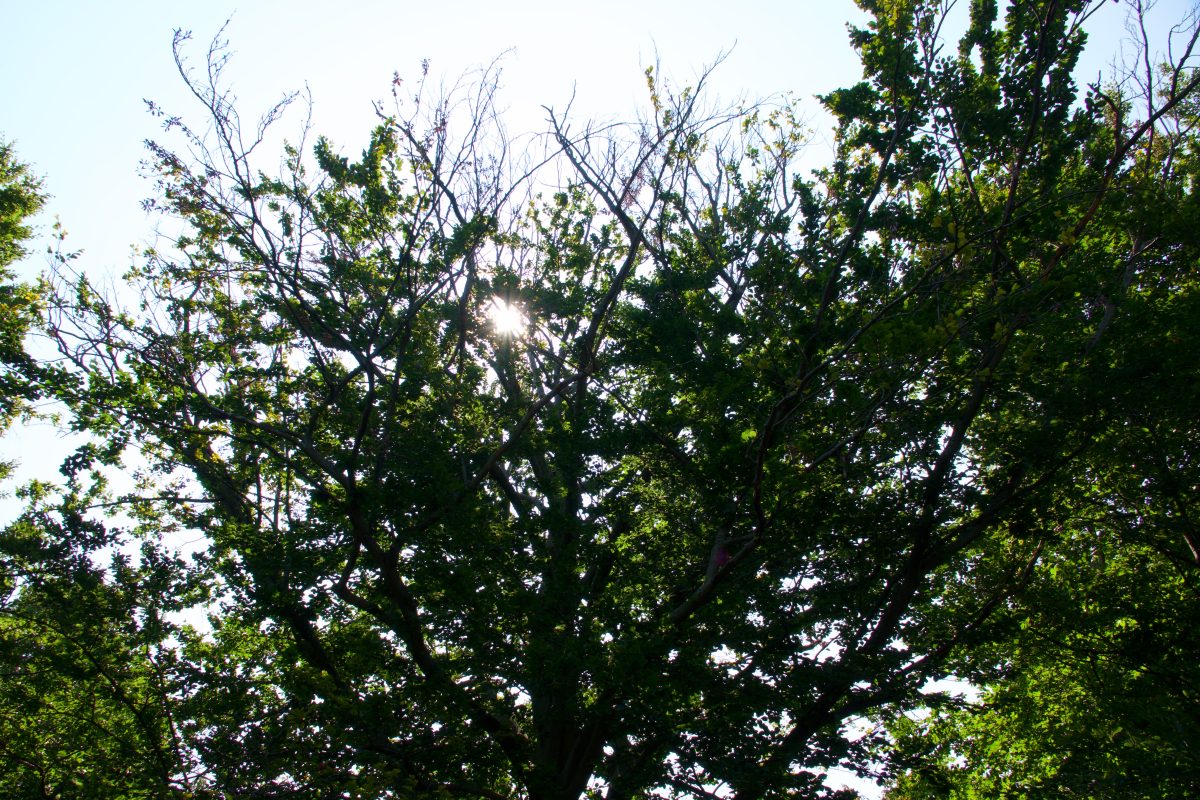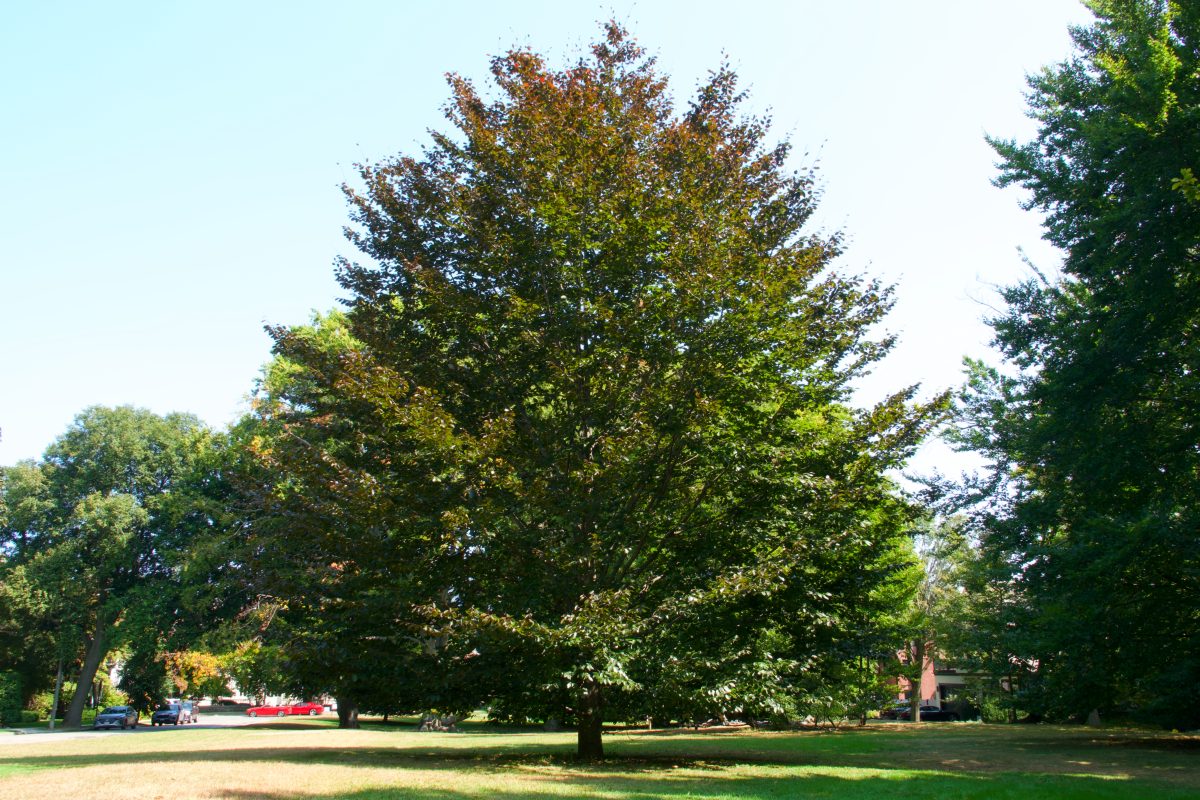
As a new disease advances among Brookline’s beloved beech trees, town officials and environmental experts are turning to scientific research to save them — while also leaning into the acceptance that all trees eventually die, and a changing climate will mean changing flora in Brookline.
Longwood Mall, a linear park between Beacon Street and the Riverway, is considered by experts to be the oldest grove of European beech trees in the country, with trees imported from France in the 1840s.
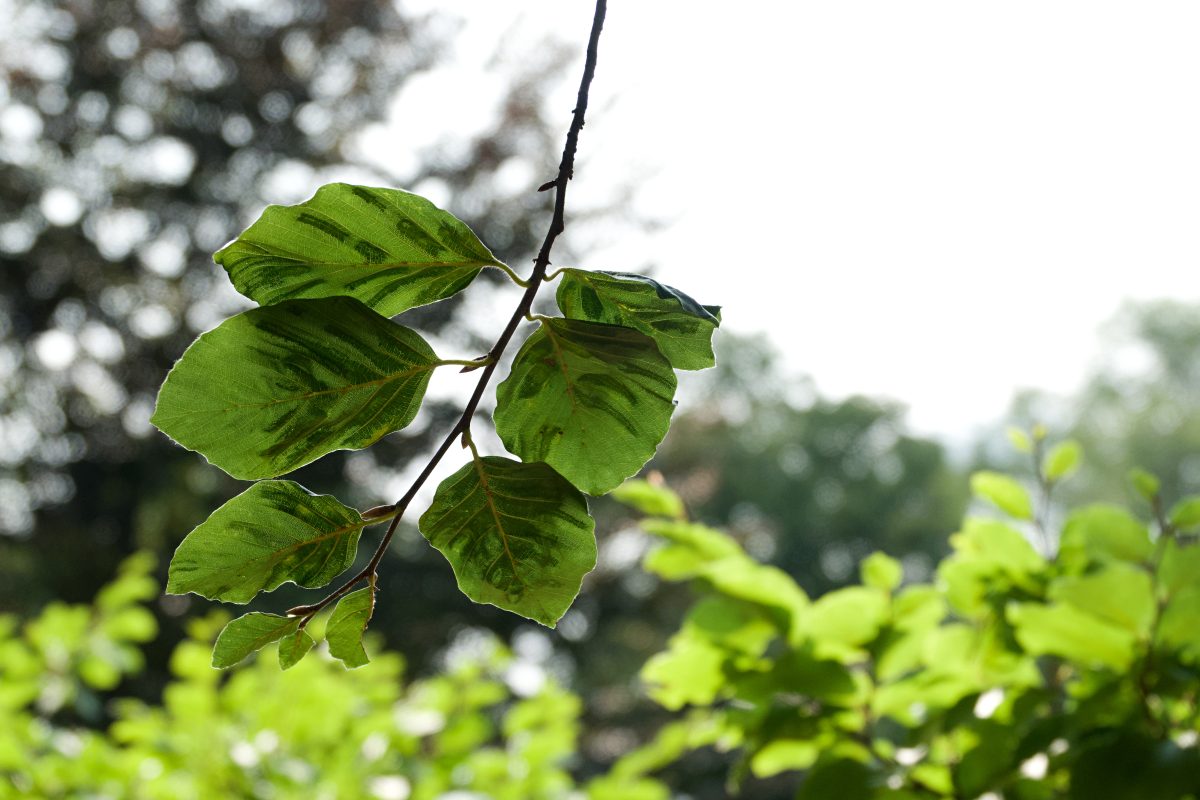
An up-close look at the aging trees shows worrying signs: dark banding across their leaves and thinning canopies, which are evidence of a tiny, spineless adversary: a nematode.
The nematode, scientific name “litylenchus crenatae mccannii,” is a microscopic worm that causes Beech leaf disease. The disease was first detected in Massachusetts in 2020 and is currently threatening the historic beech trees at the Mall. It also killed a beloved 150-year-old beech tree at the former St. Aidan’s Church in 2022.
Nematodes travel from the leaves of beech trees to the insides of buds, where they remain protected through the winter and feed, according to Dr. Beth Brantley, a plant pathologist at Bartlett Tree Experts.
The new leaves that emerge in the spring can be sparse and shriveled or leathery, and are often marked with dark bands known as interveinal striping.
While BLD’s precise method of transmission isn’t known, one way it can be spread is through wildlife like birds, deer or insects.
And the nematodes travel in numbers.
“Perhaps you’re familiar with worms,” said Brantley during a Brookline community meeting about BLD in July. “There are up to 10,000 worms within a single leaf, which is rather horrifying when you think about it.”
Ongoing treatment using new science
Brantley is part of the team of scientists that developed Broadform, a treatment for BLD currently being used at Longwood Mall. The trees undergo a series of four treatments per year, with the fungicide and nematicide sprayed directly onto their leaves to kill the nematodes. The town applied the first full year of treatment to the Mall in 2023, and completed the third application of this year in early September.
According to Brantley, the treatment is showing some success in managing the nematode population at the Mall. However, BLD continues to progress and apply pressure to Brookline’s beeches.
“It is likely advancing at a very modest rate,” said Tom Brady, the town’s tree warden and conservation administrator. “The pest and disease are so new, so we’re amending our treatment protocols to align with the latest recommendations from our partners on the research side.”
While it’s unrealistic to completely eradicate BLD, the goal is to keep it at a manageable level, he said.
However, trees are living beings that die — and the beech trees at the Mall are already quite mature.
“There’s a continuum of planting, care and nourishing the trees along, and then ultimately removal and replacement with new trees,” he said. “Beech leaf disease is part of that equation.”
In a recent visit to the Mall, Brady compared two beech trees afflicted with BLD: one with a thinning canopy at the top but an otherwise healthy appearance, and another with sparse leaves throughout. The latter will need to be removed soon.
“If there’s such a high infestation rate in a particular tree that it’s putting the other trees at risk, we move more aggressively to remove it,” he said. “This may be the last season for that tree, but then we’ll get a replacement in and keep that continual removal and renewal process going.”
He advocates for approaching tree care like healthcare, taking into account the overall well being of a tree and weighing risk versus reward when making decisions about treatment and removal.
“They’re living creatures; they have pathways, cells, and tissues. They breathe, they secrete, and they drink,” he said. “Diseases affect those functions, which affect the ability of the tree to survive.”
This holistic approach is especially pertinent to private properties containing beech trees. Homeowners should reach out to the arborists servicing their properties to assess BLD, said Brady, and not hesitate to get a second opinion if they’re unsure.
Is change inevitable?
Currently, all of the trees at the Mall are European beech trees. However, if BLD progresses past a sustainable level, experts may decide it’s best to diversify the tree species there. That’s a prospect which has some community members feeling torn.
“If it’s no longer a grove of European beech trees, it becomes something different,” said Rob Schoen, leader of the Friends of Longwood Mall. “I have mixed feelings about that, but if that’s what it takes to preserve the essence of the park, I’m definitely open to it.”
Even if the trees are diversified, said Schoen, the intention of the space will remain the same: to allow residents and visitors to appreciate nature and a nice tree canopy.
The town will hold a follow up community meeting on BLD later this fall or winter, and more information will be available soon on the Friends of Longwood Mall website, Schoen said.
For Brady, there is hope for the future of the Mall, especially since research into treating BLD is advancing quickly — but there are no absolutes.
“It’s a special place, and we’re aware of that, but it’s not immune to the challenges that nature and climate will throw our way,” he said.